ProjectAlice (down the Rabbit Hole)
Browser history is a list.
Curiosity is a path.
I’m interested in the role curiosity plays in learning. We often dismiss “idle curiosity” as a waste of time, but I think it’s where learning starts. The trouble is that it leaves no record. Your browser history shows where you’ve been, not how one thing led to the next.
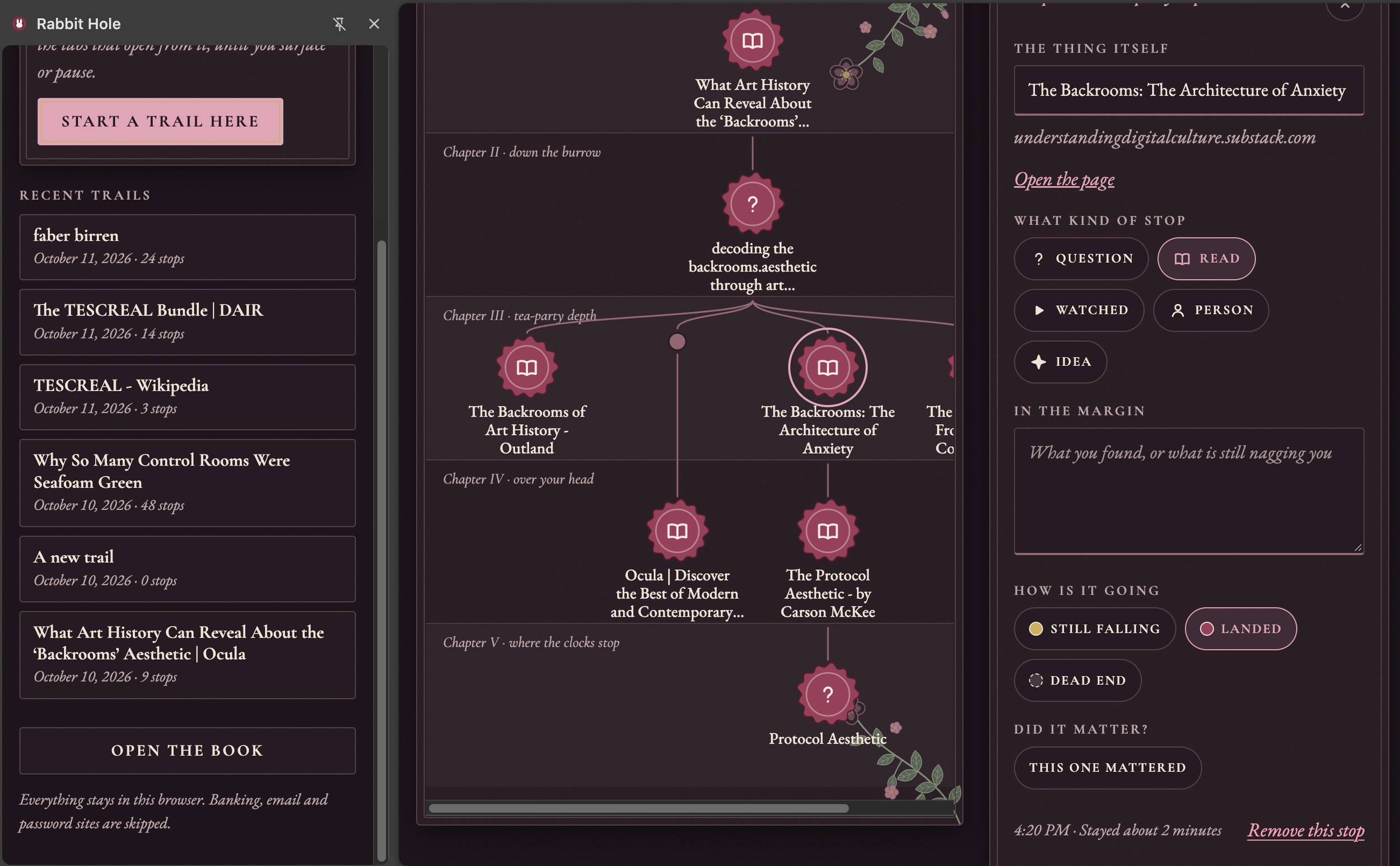
Rabbit holes usually start with a plain search, not an AI answer, so the tool has to live in the browser, not in a chat box. I built a Chrome extension, with Claude, that captures the path (what led to what) and reflects it back as a map and a report.
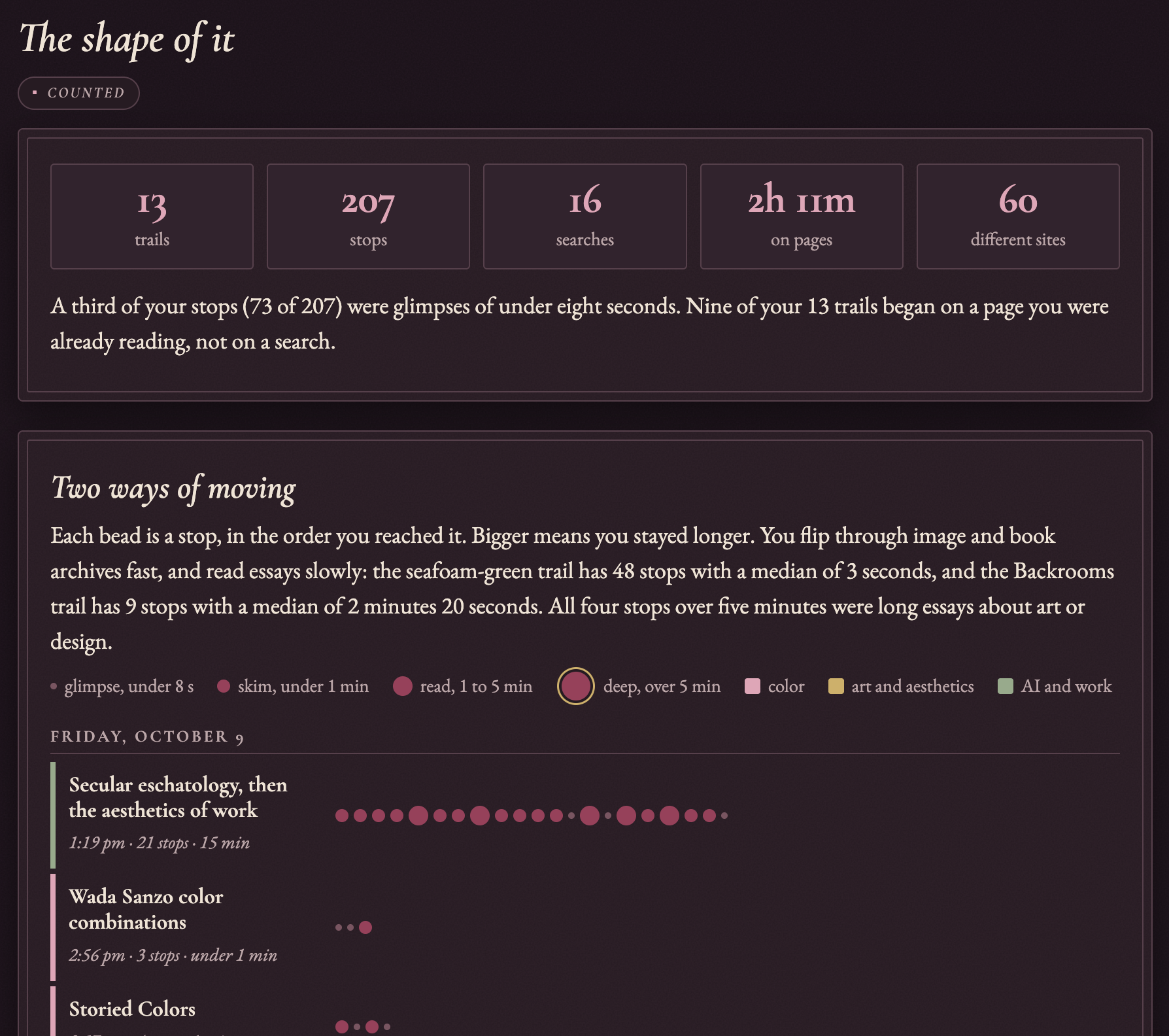
Over four days I let it follow 13 trails: 207 stops, 16 searches, about two hours on pages.
On Saturday, I read an article about why control rooms were seafoam green, and it led me to a book by Faber Birren. I flipped through it and moved on. The next evening, about 25 hours later, I searched for Birren by name. I wouldn’t have remembered the link on my own. The tool found it by matching words across trails.
I tested it on myself, and the results changed three things in the design.
I didn’t use the tagging. I’d built buttons to flag what mattered, and I never touched them. Flagging mid-trail interrupts the fall. So I’m moving review to after: you read a report and react to it, instead of stopping to tag.
Reading time was undercounted. The tool treated two quiet minutes as “away,” so a long essay looked like a short visit. It now counts up to five quiet minutes as reading.
My own assumption was only partly right. I thought rabbit holes start with a search. Nine of my 13 trails began on a page I was already reading. I didn’t know when I opened the article to start reading that it would take me down a rabbit hole.
Design choices
Track a trail, not all browsing. You start it, so it doesn’t monitor everything you do, only when your curiosity is triggered.
Store no page content. It keeps page titles, addresses without tracking parameters, and search terms on search pages. It skips banking, email, and password sites by default, and everything stays in your browser.
Count in code, interpret with Claude. Every number comes from plain code you can check. Claude’s role is limited to naming themes and asking questions, and each finding points to the stops behind it.
A reading is a hypothesis. The tool doesn’t know what mattered to you. It infers from time on a page, and you decide what’s right.
Started: Oct 3, 2026
Type: Chrome extension (local only)
Built with: Claude Code
Status: Working prototype (and still working on the prototype)